1.Introduction
Tear staining is one of the most visible and most persistently frustrating grooming problems in lighter colored companion dogs. It is also one of the most widely misunderstood — by owners, and frequently by the products marketed to them.
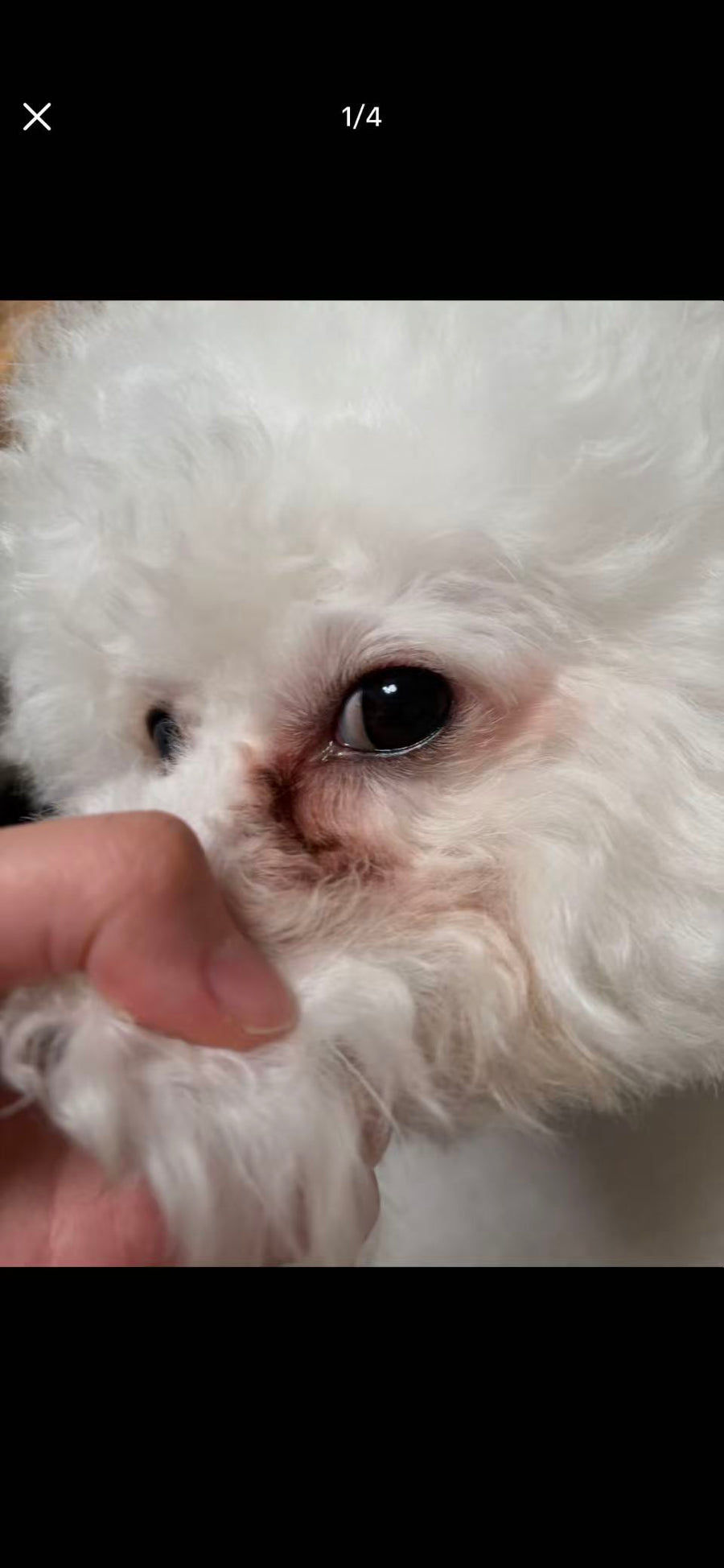
The stain itself is cosmetic. The reasons behind it are not always so. Staining is commonly a downstream consequence of epiphora, the overflow of tears onto the face, which in most affected dogs is anatomical rather than pathological in origin. Breeds such as the Maltese, Lhasa Apso, and Shih Tzu are disproportionately affected, and the condition is far more visible in light-coated animals. Facial conformation plays a substantial role: short muzzles and prominent eyes, common features of many modern breeds, are typically accompanied by narrow and often irregularly shaped tear ducts, predisposing those dogs to overflow and subsequent staining.
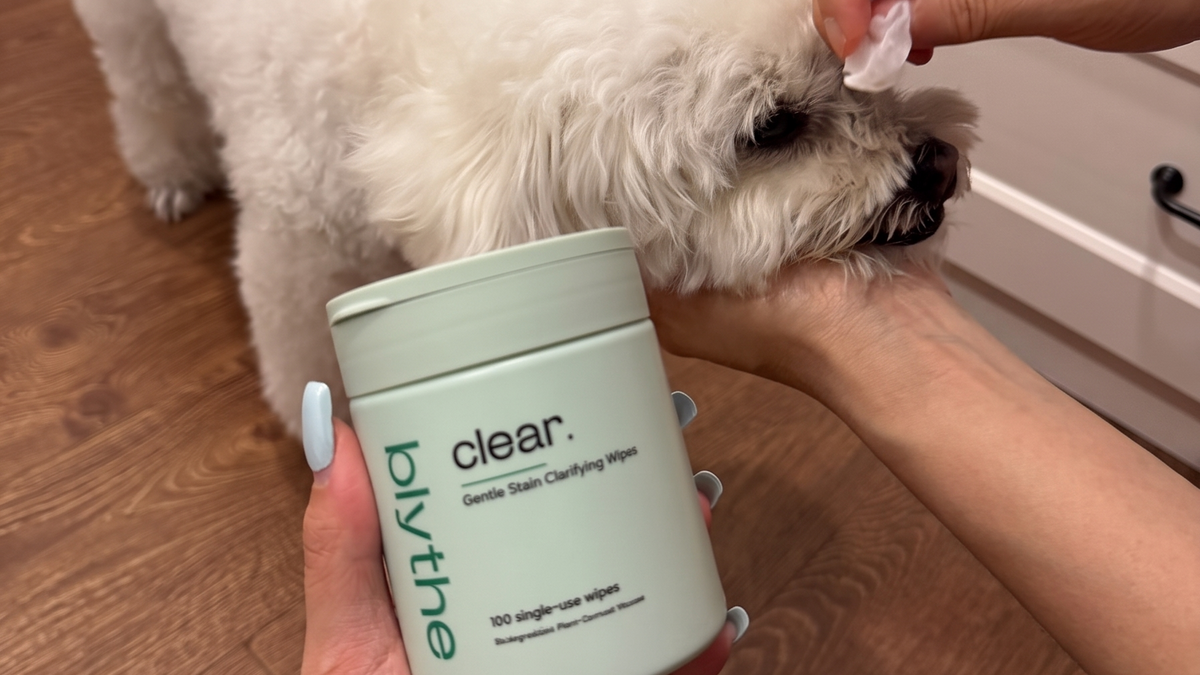
Blythe developed clear., as a topical daily-use product intended to address existing surface staining. Before making any public claim about how it performs, we ran a small internal trial on real dogs, in real households, under ordinary daily conditions. This report documents that trial in full, including what it does and does not establish.



2.Background
2.1The mechanism of staining
When tears dry on the fur beneath the eye, the porphyrin discolors both hair and skin. Porphyrins are excreted through multiple bodily secretions — tears, saliva, urine, and gastrointestinal contents — and while all dogs carry some porphyrin in their tears, certain breeds are markedly more prone to visible staining.
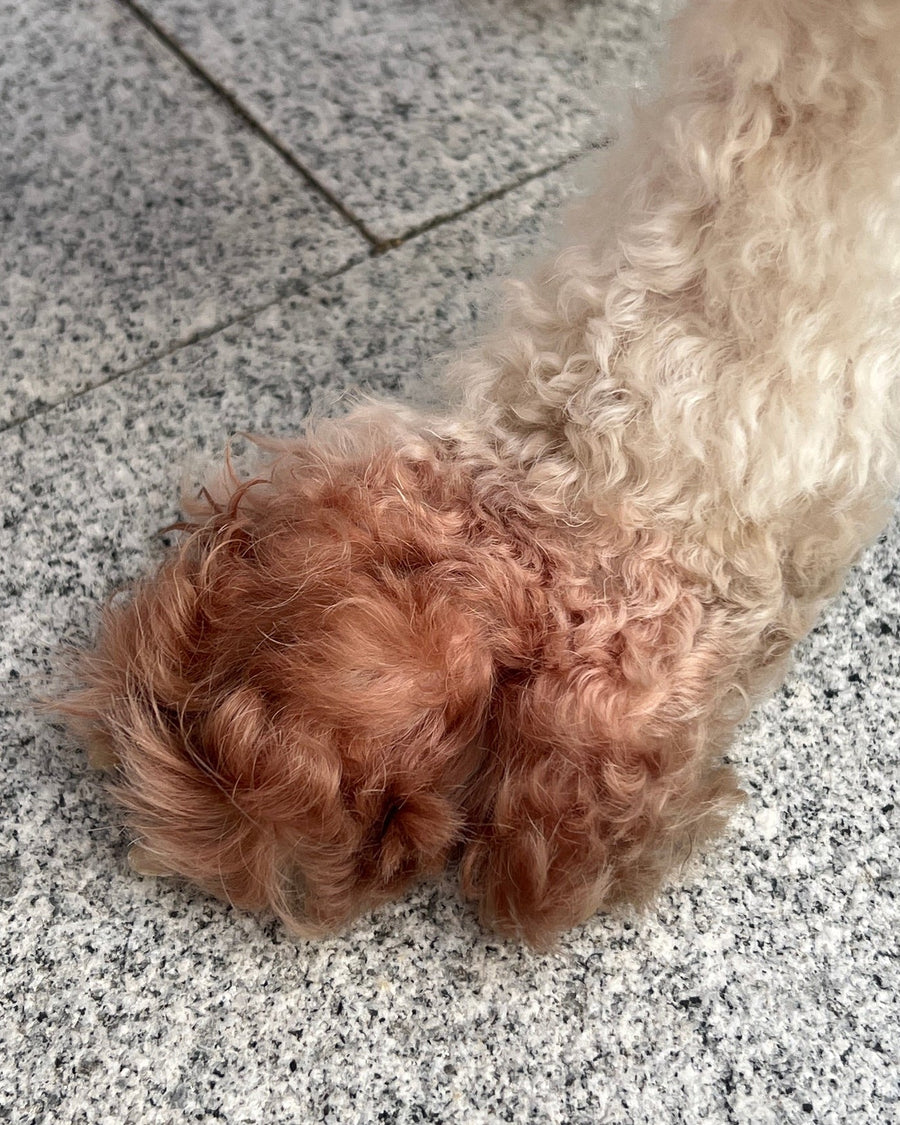
This mechanism explains a pattern familiar to any owner of a white dog: staining is not confined to the eye area. Saliva contains porphyrin in the same way tears do, so wherever saliva sits on light-colored fur — around the mouth, or on the paws and legs of a dog that licks them — staining follows. Paw staining is not a separate problem from tear staining. It is the same pigment, deposited by a different fluid.
An additional factor compounds the picture. Fur kept persistently damp by tear overflow creates a favorable environment for microbial growth in close proximity to the eye, which can contribute to irritation and to the darkened, matted appearance of chronically stained areas.
2.2Why coat tone matters
Porphyrin deposition occurs regardless of coat color. What changes is visibility. Staining is readily apparent on white coats and considerably harder to detect on dark or black ones. This has a practical consequence for any trial of this kind: clearance assessed visually is a measure of what can be seen, and the contrast between stain and base coat differs across coat tones. This is a known interpretive limitation of visual grading, and it is one reason the present trial grouped subjects by coat tone rather than pooling them.
2.3Why we took a different route
The tear-stain category has a difficult history worth stating plainly, because it directly shaped how clear. was formulated and how we talk about it.
In 2014, the U.S. Food and Drug Administration issued warning letters to manufacturers of several widely sold tear-stain removal products, on the grounds that they were unapproved animal drugs never reviewed by the FDA for safety or effectiveness, and that they contained tylosin tartrate — a medically important antibiotic not approved for use in dogs or cats, nor for treating conditions associated with tear stains. The FDA's letters cited company statements claiming their products killed bacteria, eliminated infections, or treated the conditions causing staining. Under the relevant rules, a product is considered a drug if it is intended to mitigate, treat, or prevent disease, or to affect the structure or function of an animal's body.
Two things follow, and both are load-bearing for us.
The first is a safety and stewardship point. Sustained low-level antibiotic exposure contributes to bacterial resistance, which is why veterinary clinicians have advised against this category of product. An antibiotic is not a grooming ingredient, and we do not believe it belongs in one.
The second is a claims point. The line between a cosmetic and a drug is not drawn by what a product contains — it is drawn by what the maker says it does. This is precisely why the language throughout this report is restrained, and why we describe clear. as acting on existing surface staining rather than treating, curing, or preventing any underlying condition. It does not do those things, and a grooming product that claims otherwise has made itself into an unapproved drug.
3.Materials & Methods
3.1Subjects
Ten dogs were enrolled in the trial, grouped by coat tone:
| Group | Coat Description | n |
|---|---|---|
| A | Bright white | 4 |
| B | White/cream | 3 |
| C | Light brown / cream | 3 |
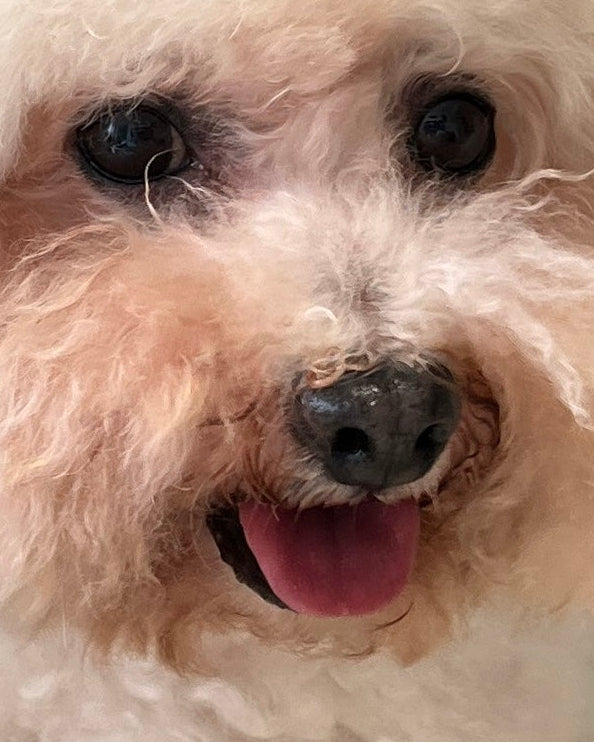
All subjects presented with visible staining prior to the start of the trial, most commonly under the eyes, with staining also observed around the mouth in some subjects and on the paws in others.
3.2Protocol
- Product used
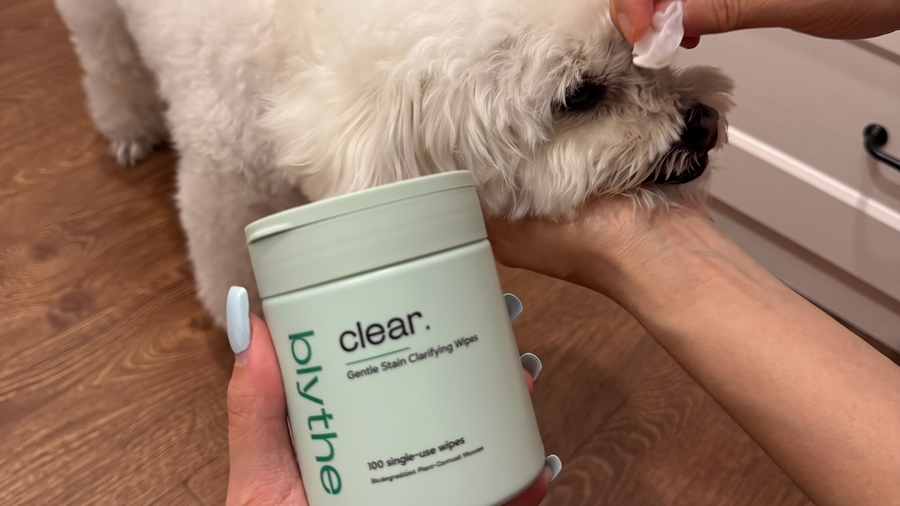
- blythe clear. gentle stain clarifying wipes
- Application frequency
- Once daily
- Mechanism
- Chelation: sodium citrate + sodium gluconate + disodium EDTA binding the iron that drives porphyrin oxidation, lifting it out of the coat
- Application areas
- Affected sites per subject (under-eye, muzzle/mouth, and/or paw staining, as applicable)
- Duration tracked
- Time from first application to complete visible clearance of existing staining
- Assessment method
- Visual inspection of stained areas at regular intervals throughout the trial period
3.3Limitations
This was an internal, non-blinded observational trial without a placebo or untreated control group, and without standardized photographic grading or third-party assessment. Sample size was small (n=10). As such, results should be read as directional product-performance observations rather than clinical or scientific proof of efficacy, and individual results in real-world use may vary based on staining severity, coat type, and consistency of application.
4.Results
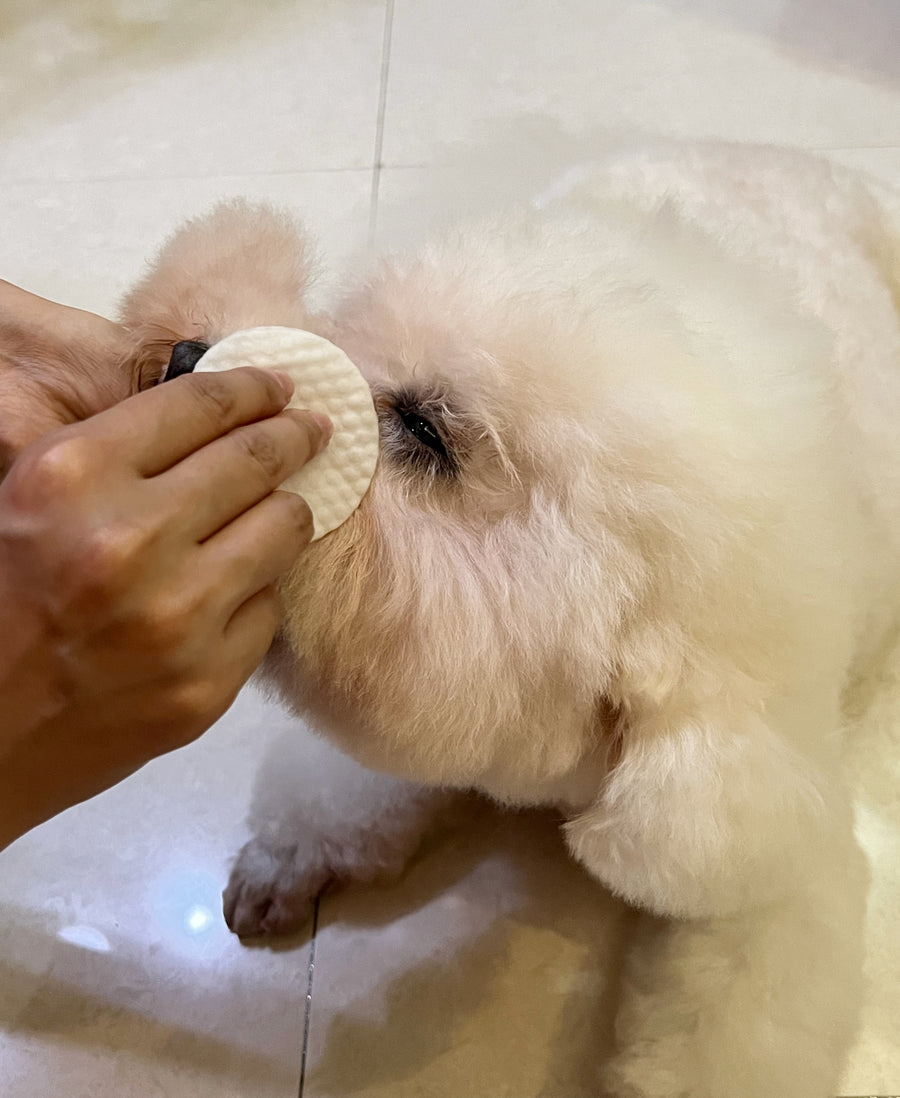
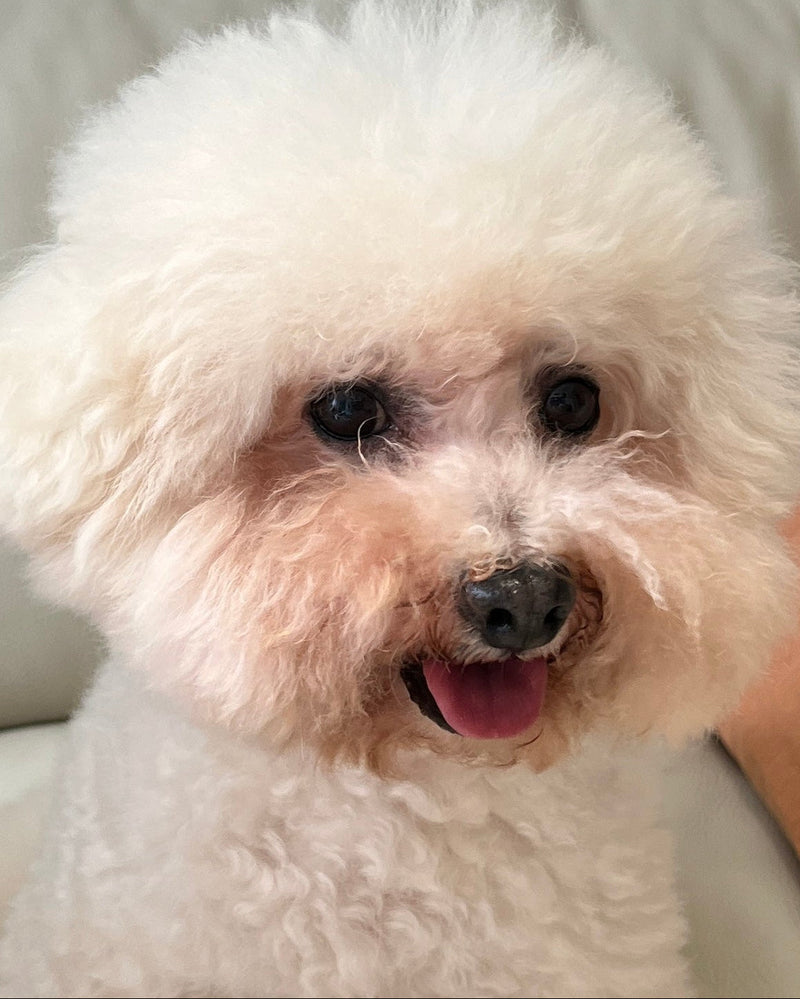
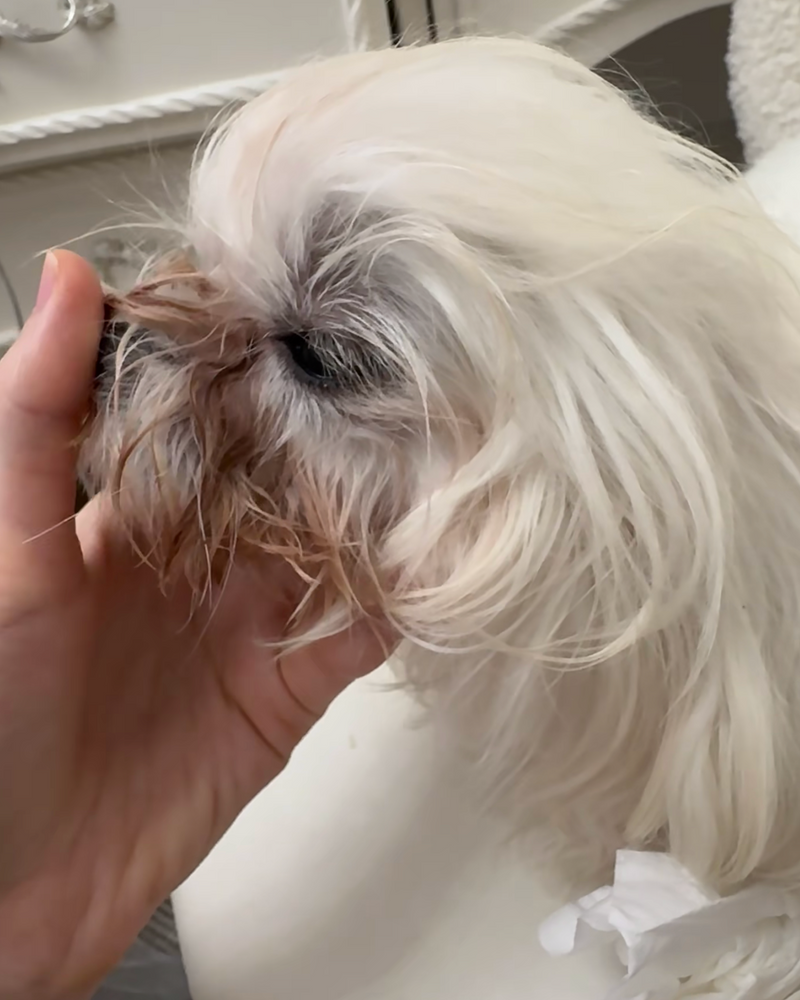
All ten subjects achieved complete visible clearance of existing staining by the three-week mark of daily use. Time to clearance varied modestly by coat tone:
| Group | Coat Description | n | Time to Complete Clearance |
|---|---|---|---|
| A | Bright white | 4 | ~3 weeks |
| B | White/cream | 3 | ~2.5 weeks |
| C | Light brown/cream, near-white | 3 | ~2.5 weeks |
Staining sites varied by subject and included the under-eye area (most common across the sample), the area around the mouth, and the paws. Across all groups, staining was reported as fully cleared by day 21 of consistent daily application, with lighter/cream-toned groups (B and C) reaching clearance slightly faster than the bright-white group (A).


5.Discussion
5.1Principal observation
Across all three coat groups, once-daily application of clear. was associated with complete visible clearance of pre-existing staining within approximately two and a half to three weeks. The consistency across groups is a more notable feature of the result than the modest difference between them.
5.2Difference between groups
Groups B and C reached clearance roughly half a week earlier than Group A. Care is warranted here, because this is exactly the sort of small numerical difference that marketing tends to over-read.
There are at least three plausible explanations, and this trial cannot distinguish between them:
- 1.Contrast effects. Residual staining is more visible against a bright white coat than against cream or light brown. A stain judged "cleared" on a cream coat might still be faintly detectable on a bright white one. Because assessment was visual, Group A had, in effect, a stricter threshold to meet.
- 2.Baseline severity. Subjects were not matched for degree of staining at enrollment.
- 3.Individual variation. With three to four dogs per group, a half-week difference could easily be noise.
We consider the contrast explanation the most likely, but the trial was not designed to test it, and we do not claim it. No causal relationship between coat tone and product performance is asserted.
5.3The role of consistency
The one variable held constant throughout was daily application. Every subject that cleared did so under a once-daily routine maintained across the full period. This is consistent with what the underlying mechanism would predict: porphyrin staining is deposited continuously by tears and saliva, so surface treatment works against ongoing re-deposition. Intermittent application would be expected to perform differently, though this trial did not test that.
5.4What this trial does not establish
Stated directly, because it matters:
- It does not establish that clear. prevents new staining. Only clearance of existing stains was observed.
- It does not establish a cause of the staining in any subject, nor address underlying epiphora.
- It does not establish that these timeframes will hold for any individual dog. Real-world results will vary with staining severity, coat type, underlying cause, and consistency of use.
5.5A note on underlying causes
Staining is a surface phenomenon; the tear overflow producing it may not be. Where staining around the mouth increases, veterinary evaluation is advised to rule out medical causes, as staining will continue to progress until any underlying issue is treated or managed. Sudden onset, asymmetry, apparent discomfort, squinting, discharge, or odor all warrant veterinary assessment rather than a cosmetic product. clear. addresses appearance. It does not address cause, and it is not a substitute for veterinary care.


6.Conclusion
In this internal 10-subject trial, daily wipe application of blythe clear. was associated with complete clearance of visible facial and paw staining within roughly three weeks across white, cream, and light-coated dogs. Consistency of daily use appeared to be a key factor in the outcomes observed. Further, larger-scale and controlled trials would be needed to substantiate these findings as formal efficacy claims.